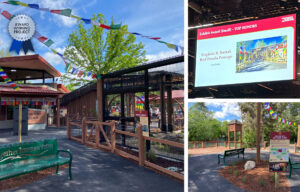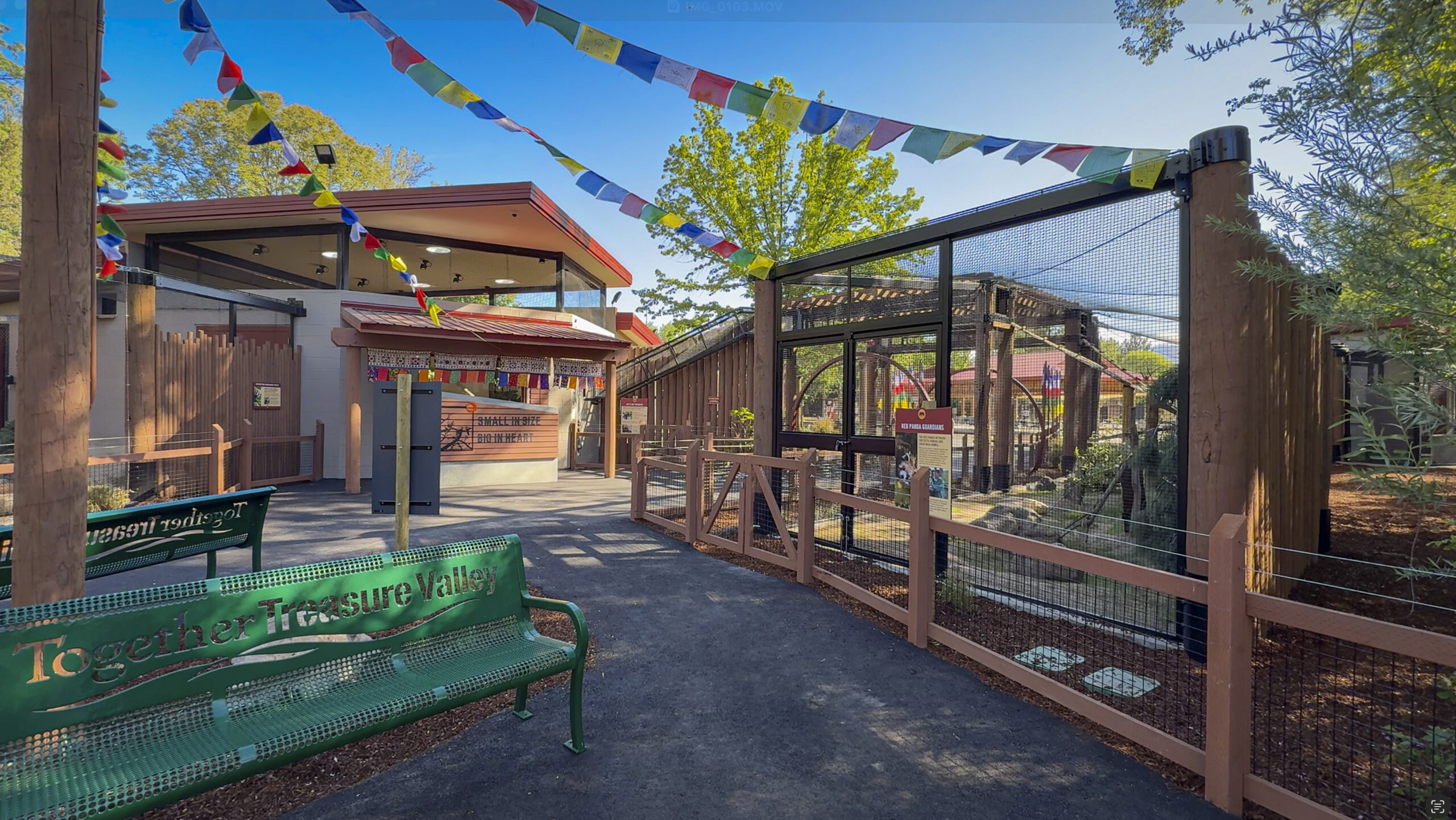
At our most recent ECHO Digital session, Mike Clifford, Director of Special Projects at TESSERE, joined Tierney Ball, Director of Education at Friends of Zoo Boise, and Jamie Ohrt, Associate Architect at TESSERE, for a behind-the-scenes look at the award-winning Virginia R. Bartak Red Panda Passage habitat.
The conversation explored the collaborative design process behind the habitat, the evaluations used to assess its impact, and what the findings suggest about designing spaces that better support the animals in our care and the guests who visit our zoos and aquariums.
Animal welfare is one key driver of success in habitat design. In practice, it’s a balancing act of cost, timelines, guest experience, immersion, and operational considerations.
The Virginia R. Bartak Red Panda Passage at Zoo Boise offers a compelling example of designing with clear impact in mind.
Here are four takeaways from the conversation that have stuck with us.
TESSERE’s Take
Start with the Impact You Want to Create
Defining success before a project begins is hard work.
Aligning stakeholders around a small number of clear, tangible, and measurable goals takes time and discipline. But that clarity becomes invaluable as budgets change, designs evolve, and unexpected challenges arise.
For Zoo Boise, animal welfare remained a clear priority throughout the project, giving staff, designers, contractors, and donors a shared decision-making framework.
What would happen if everyone involved in your next project could clearly articulate its top three intended outcomes?
Get the Right Voices in the Room at the Right Time
The experience of animals in our care depends largely on the spaces we create and how staff operate them. Yet animal welfare and operational considerations often enter the process after key decisions have already been made.
At Zoo Boise, keepers and educators were involved from the very start. Their requests were practical and specific: places to store bamboo, reliable access to water, and other operational details that make daily care easier. And when staff spend less time on logistics and more time caring for animals, the animals benefit.
Animal care staff, maintenance teams, guest services, designers, and finance teams all see different parts of the system. When those perspectives are included early, seemingly small ideas can have an outsized impact. Often the best thing a leader can do to ensure a project’s success is to check their ego at the door.
What would happen if you asked every role, from keepers to maintenance to guest services, what it would take from their perspective to achieve your next project’s goals?
Just a Bit of Data Can Lead to Big Insights
Evaluation can feel like a big undertaking, especially for organizations without dedicated evaluation staff or academic partnerships.
But it doesn’t have to be.
Zoo Boise kept it simple. Rather than trying to measure everything, the team identified a focused set of animal behavior and guest perception indicators, established a baseline in the red pandas’ previous habitat, and then measured those same indicators after the new habitat opened.
This focused approach is now informing future decisions and raising new questions worth exploring.
What could your organization learn if it started the next project with a baseline and one question worth measuring?
Guest Experience and Welfare Aren’t Mutually Exclusive
Animal welfare and guest experience are still commonly framed as competing priorities, with the assumption that giving animals more choice and control means less visibility and engagement for guests.
Zoo Boise’s findings suggest otherwise. After the new habitat opened, guests spent more time observing the red pandas, reported seeing a greater variety of active behaviors, and described stronger conservation-related outcomes, including increased awareness and empathy.
By designing with animal welfare in mind, the team also created a stronger guest experience.
What animal-welfare-first decision could also improve your guest experience?
A Closing Invitation
None of these lessons required a massive budget or a research department. They required clarity, curiosity, forethought, and the inclusion of multiple, sometimes unexpected, perspectives.
In your next project, consider the questions posed here.
What would happen if everyone involved in your next project could clearly articulate its top three intended outcomes?
What would happen if you asked every role, from keepers to maintenance to guest services, what it would take from their perspective to achieve your next project’s goals?
What could your organization learn if it started the next project with a baseline and one question worth measuring?
What animal-welfare-first decision could also improve your guest experience?
Thank you to Tierney and the entire team at Zoo Boise for your partnership, transparency, and tireless advocacy for animal welfare, meaningful guest engagement, and collaboration.