At our most recent ECHO Digital session, we sat down with Amber Christopher, Vice President of Harley-Davidson Experiences, for an inside look at how the Harley-Davidson Museum is using AI to deepen emotional connection, welcome new audiences, and bring a 122-year-old legacy to life.
Built in 2008, the museum's galleries were never designed to change. Capital for exhibit rebuilds is hard to come by. And yet, the team is finding ways to evolve — honoring what already exists and finding new ways to bring it to life.
Here are five takeaways that have stuck with us.
TESSERE’s Take
What If People Were Tattooing Your Logo on Their Arms?
Harley riders get tattoos of the brand. They ride to Milwaukee from around the world because it’s holy ground. 1,200 bikes roll onto campus on a Thursday night just to hang out together. Harley-Davidson doesn’t just sell motorcycles; they invite people into a community. The museum is designed to deepen that invitation, moving people along a spectrum of brand affinity so that even the 70% of guests who’ve never been on a bike leave feeling like they’re part of something. You may never ride, but you might tell everyone about the experience.
What is your institution inviting people into — and does it feel like something worth belonging to?
Motivation Matters More Than Demographics
Rather than starting with demographics — where are you from, what’s your age bracket, family or individual — the museum built “passion profiles” around psychographic questions that get at intrinsic motivation. Why are you here? What do you connect to? Adventure? Community? History? AI interprets those answers and tailors the experience to what actually drives each guest, weaving them into the brand’s story in a way that speaks to their values.
For many in the room, this felt like a familiar challenge: how to meet people where they are, speak to what motivates them, and do it at scale—without losing the human core of the experience.
Legacy Is a Foundation, Not a Constraint
The museum tells the story of a company that’s still writing its next chapter — honoring what’s been built while remaining willing to ask what comes next. As Amber put it, the best 125 years are still ahead. Evolving doesn’t mean something was wrong. It means standing on what came before and looking forward. For organizations rooted in decades of legacy, the instinct to protect can quietly become a reason not to grow.
What if honoring your legacy meant daring to build on it?
Stop Taking Yourself So Seriously
When Amber’s curatorial team visited the College Football Hall of Fame to see a similar AI experience, what struck them wasn’t the technology — it was that people were laughing. It made the team realize the Harley-Davidson Museum had become, as Amber described it, “library-esque.” For a brand built on joy, adventure, and the open road, that was a wake-up call. And it was the museum’s constraints that helped push them there. When you can’t rebuild the galleries and you don’t have unlimited capital, you have to get creative.
Sometimes the lack of resources is exactly what drives innovation.
Clarity Comes from Knowing the Non‑Negotiables
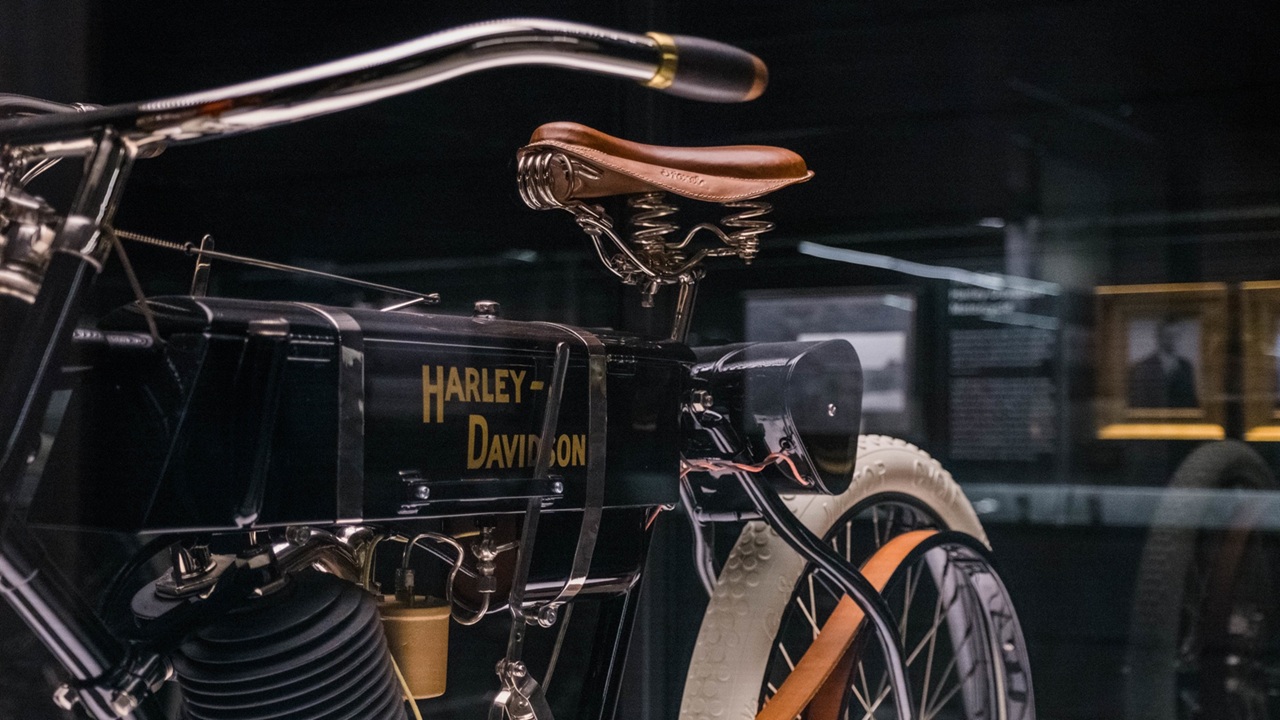
Harley-Davidson fans will call out anything that isn’t authentic. So rather than letting that stop them from experimenting with AI, the team turned it into design principles: the AI can’t alter the motorcycles, every AI-generated element is clearly labeled, and guests can opt out. They also made sure new touchpoints didn’t compete with moments they already knew mattered. Serial Number One still gets its uninterrupted reveal. The AI experience is layered around those anchors, adding rather than distracting.
That clarity gave the team confidence about where they could experiment—and where they shouldn’t.
A Closing Invitation
Amber left the group with encouragement: change is possible when an organization is willing to listen.
Modernizing the experience at the Harley-Davidson Museum wasn’t framed as abandoning legacy, but as responding to guest expectations and curiosity—signals that people want museums to keep evolving. In that context, staying the same isn’t neutral. It’s a choice.
As Amber shared, if you listen to your guests, they’re telling you they want you to evolve. And in that, the real risk isn’t change—it’s standing still.