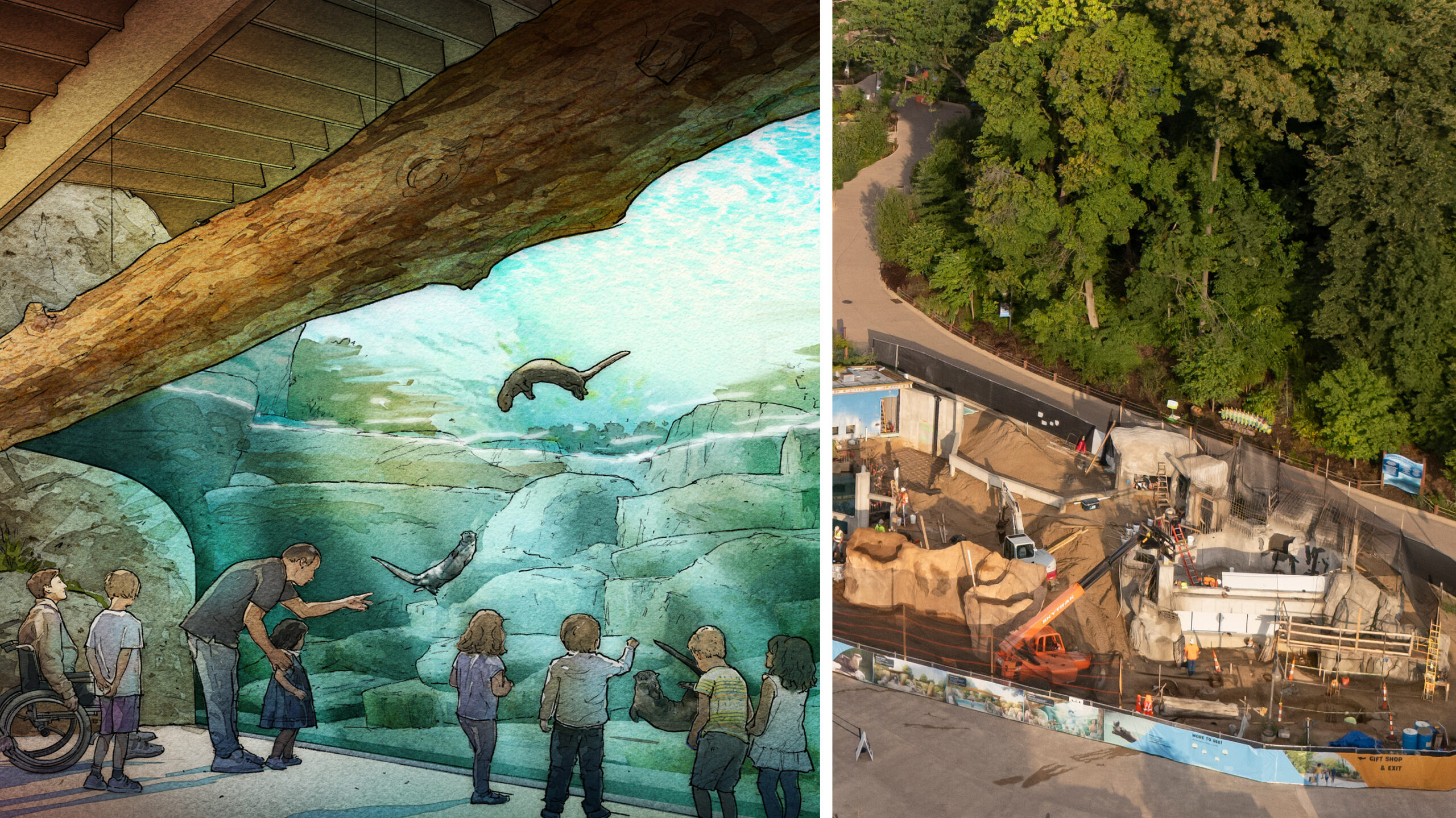
At November's ECHO Digital, Allmon Forrester, Vice President of Planning & Sustainability at John Ball Zoo, joined TESSERE designers Cooper Dahms and Dale Stafford to share the story behind the zoo’s new North American River Otter habitat, a dynamic experience rooted in sustainability. The project, opening spring 2025, is on track to become one of the first zoo exhibits in the nation to achieve the International Living Future Institute’s Zero Carbon certification.
From geothermal systems and an extensive green roof to low-carbon shotcrete and reclaimed materials, every decision was anchored in animal well-being, operational efficiency, and a long-term carbon strategy. This habitat shows us what’s possible when a zoo is clear about its values and assembles a team capable of delivering on them.
Here are five key takeaways that emerged from the conversation, applicable to capital projects of any scale.
TESSERE’s Take:
- Start With Clarity on Day One, Not at 50% Design
John Ball Zoo named its sustainability goals before even issuing an RFP, and before anyone fell in love with a conceptual design. This early clarity influenced the delivery method, informed infrastructure decisions, and shaped every discussion that followed. As Allmon emphasized, “You need to start it from day one so everybody’s pulling in the same direction.”
For TESSERE, these commitments aligned seamlessly with the adaptive master plan: an entry experience that tells the story of water. Of the rivers, wetlands, and watersheds that connect people to place. Because the goals were defined early, the team could innovate and integrate sustainable systems from the outset rather than react and retrofit.
- Push Beyond “Good Enough”—and Bring Your Community With You
As building codes increasingly approach LEED standards in some communities, John Ball Zoo asked a more ambitious question: What’s next? For them, it meant pursuing Living Future’s Zero Carbon certification for this project, driven by knowing that nearly 40% of global carbon emissions come from the built environment. If zoos and aquariums want to model sustainability for their communities, the work must begin with the systems and materials they choose .
This ambition isn’t just shaping this project; it’s expanding regional and professional capacity. To meet the Zero Carbon goal on a steep site requiring substantial concrete, the team leaned into a CMAR delivery model that brought engineers, shotcrete contractors, and concrete suppliers into the conversation early. Together, they explored lower-carbon mixes, tested new formulations, and adapted application techniques to maintain structural performance.
The result was a concrete strategy that reduced embodied carbon by 19%, well beyond thresholds required for certification. And the engineers who validated these mixes will offer them to the next client. Shotcrete applicators who adapted their process now know how to meet higher standards. Suppliers who produced low-carbon blends now have market-ready options.
Mission-driven projects don’t just advance one organization’s goals. They can redefine what “possible” looks like across an entire profession and region.
- Build the Team Around the Vision, and Center the People Who Operate It
Great design partnerships don’t happen by accident. They emerge when organizations show up with clarity and a defined purpose. Because John Ball Zoo was clear about its goals, the team could:
- Assemble specialty consultants early
- Coordinate geothermal wells around existing infrastructure
- Engage trade partners in problem-solving instead of late-stage fixes
- Integrate operational insights from animal care, maintenance, and facilities
But sustainable design only works when the people who will operate it shape the decisions. As Allmon noted, “Facility folks can take green initiatives the furthest and get the most bang for the buck.” Operators understand how systems behave, where maintenance challenges emerge, and how to balance utilities with animal needs. Their perspectives ensure that sustainable design becomes sustainable practice.
- Design for the Next 20 Years, Not Just Opening Day
This habitat’s systems reflect a long-term strategy to reduce carbon, support thriving animals, and ensure operational durability. These include:
- Geothermal wells supplying heating and cooling to both the building and the water
- Underfloor heating in animal spaces where otters naturally prefer to rest
- A native-plant green roof using a six-inch modular system for stormwater and thermal management
- Green retaining walls that soften site edges while cooling and stabilizing slopes
- Ozone-based water treatment that produces crystal-clear views with lower chemical loads
- Low-carbon shotcrete with significantly reduced embodied carbon
- Reclaimed wood carried forward from previous zoo projects
These choices required early coordination and upfront investment, but they will reduce utilities, build resilience against rising energy costs, and support animal welfare. “It often costs more not to build green in the long run.”, Allmon noted. Sustainability isn’t in the margins; it’s a long-term business strategy.
- Align Species, Story, and Systems
In John Ball Zoo’s entry experience, the connective story is of water – rivers, wetlands, and watershed health. North American river otters were chosen not only because they are dynamic and a guest favorite, but also because they are a climate-appropriate species for Michigan’s environment.
That climate alignment lowers mechanical loads, reduces energy use, and facilitates welfare-forward features: deeper dive pools, clearer water, more natural foraging behavior, and immersive underwater viewing.
Because the species fit both the climate and the story, the team could design:
- A deep dive pool with expansive underwater views
- Interactive fish delivery systems (“fish cannons”) for enrichment and natural behavior
- Accessible features, including inclusive access to unique underwater views
- Experiential opportunities focused on watersheds, rivers, and carbon impacts
The Closing Invitation
John Ball Zoo’s sustainability story didn’t begin with Zero Carbon certification. It began with an outsized water bill, a “why,” and a refusal to accept old assumptions. Fourteen years later, water systems, stormwater strategies, utilities, and construction standards reflect a sustained commitment.
For others, an invitation:
- Ask: Who do we want to be when we build?
- Name one value-driven commitment that will shape how you design, source, or operate.
- Give your facilities and operations teams a louder voice
- Invite your partners to stretch with you – suppliers, engineers, architects, funders.
You don’t have to pursue Zero Carbon certification. But you do have to choose who you want to be. And build accordingly.
Discover more about this project here!